Furnace Maintenance
FURNACE TUNE-UP IN SALT LAKE CITY — BEFORE INVERSION SEASON
An annual pre-winter tune-up catches 80% of failures we'd otherwise see as 2am no-heat calls. In SLC, that especially matters on aging octopus and 80s-vintage furnaces with cracked-heat-exchanger CO risk. 60-90 minutes on site, written report.
4.8★ on Google
3,132+ reviews
24/7 Emergency
60–90 min dispatch
Licensed & insured
Utah plumbing contractor
5 Utah counties
50+ cities served
Flat-rate pricing
Quoted before we start
Overview
Why a real furnace tune-up matters more in old SLC homes
Most "furnace tune-ups" advertised for $49 or $79 are 15 minutes of visual inspection and a filter change. That's not maintenance — that's a sales call dressed as service. A real tune-up takes 60 to 90 minutes, pulls panels, cleans combustion components, and measures things with actual instruments. Done every September or October before the first hard cold snap, it catches the four or five failures that would otherwise send us out on emergency calls in January.
This matters more in Salt Lake City than in West Jordan or Lehi for two reasons. First, SLC has the highest density of older furnaces still in service — octopus units from the 1940s, 80s-vintage 80% AFUE furnaces, 90s mid-efficiency units that are now 25-30 years old. Older equipment is more likely to fail catastrophically (cracked heat exchanger, blocked flue, bad limit switch) and more likely to fail in dangerous ways (CO leaks). Second, SLC's January inversion makes combustion safety more important — a marginal furnace that's pulling combustion air from a basement on an inversion day is producing more CO than the same furnace would on a clear November morning.
What's actually included in our tune-up
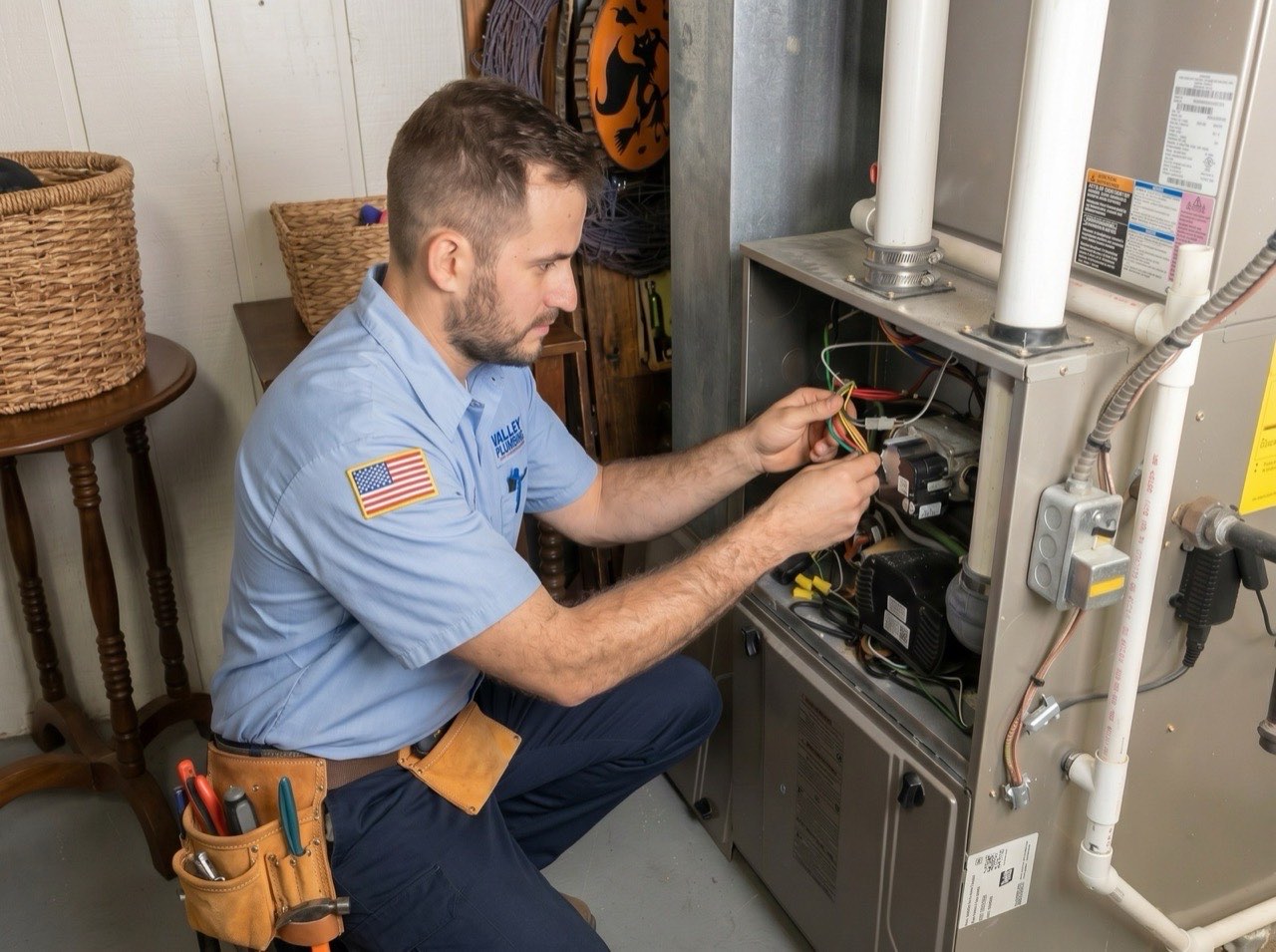
- Combustion chamber and burner cleaning — carbon and soot removed with brush and compressed air, flame pattern verified visually
- Flame sensor clean and test — steel wool the rod, measure microamp signal (target 4-10 µA for reliable operation)
- Heat exchanger visual inspection — cracks, rust, stress fracturing, CO leak risk; we go deeper on aging SLC equipment
- Pressure switch test — verify it opens and closes at spec, catch drift before it causes a lockout
- Hot surface ignitor resistance check — ohm-out the ignitor, catch the "about to fail" signature
- Gas pressure measurement — manifold pressure set to manufacturer spec, common drift from utility pressure variation
- Blower motor and wheel cleaning — remove accumulated dust, check amp draw against nameplate
- Condensate drain flush (95% AFUE units) — clear the trap, verify drain path, check for freeze risk
- Electrical and safety controls — limit switches, rollout switches, draft inducer, all exercised and tested
- Combustion analysis — CO, O2, CO/air ratio, flue temp measured with calibrated analyzer; non-negotiable on pre-2000 SLC equipment
- Thermostat calibration — verify temp accuracy, heat anticipator or cycle rate set correctly
- CO testing at supply registers — extra step in older homes where heat exchanger cracks are more likely
What you actually get
At the end of the visit, a written report listing every test result and any component outside spec. If something's borderline — flame sensor microamps at 3 instead of 6, for example — we flag it and recommend replacement now rather than at 11pm in January. If everything looks good, the report documents that, which matters for warranty claims and home sale inspections. On older SLC equipment we also document the heat exchanger condition with photos — important reference for future service or insurance.
Why now vs spring
September or October. Two reasons. First, if we find a bad component, you have weeks to replace on a non-emergency basis instead of surcharge-era. Second, dust and debris that accumulated over summer (when blower runs for AC) needs to come off before burner fires hard. Lighting a dust-coated furnace on the first cold night of October is how you get the burning-dust smell — and occasionally a smoke alarm — for the first hour of heating season. Especially common in old SLC homes with ductwork that gets worse over time.
Cracked heat exchangers — why we look harder in SLC
Heat exchanger cracks kill people every winter. Cracked exchangers leak combustion gases — including CO — into the supply air stream, where they get distributed through the home. The risk is highest on furnaces 15+ years old, especially aluminized-steel exchangers that corrode from the inside. SLC has the highest density of pre-2005 furnaces in the valley. Our tune-up includes a thorough heat exchanger visual with a borescope camera on any unit older than 12 years. If we find a crack, the unit gets red-tagged and we have the replacement conversation. CO levels above 100 ppm in the flue during combustion analysis is the secondary indicator we pay attention to.
Inversion-day air quality angle
On January inversion days, outdoor PM2.5 and CO levels can spike. A furnace pulling combustion air from a leaky basement breathes that polluted air, runs incomplete combustion, and produces more CO than the same furnace on a clear day. A properly tuned furnace with good gas pressure, clean burners, and verified flame pattern produces less CO and runs cleaner — meaningfully. We see annual gas bills drop 5-10% on tuned-up vs untuned units even when no parts are replaced.
Quality Service Club HVAC
The annual tune-up is the core benefit of Quality Service Club HVAC — $199/year for one unit, $258/year for plumbing plus HVAC. Members get tune-up included, 15% off any repair, priority dispatch (skip the queue on hard-freeze nights), 1-year parts/labor warranty on anything we repair, and 10% discount on new-unit replacement. For most SLC households with older equipment, the membership pays for itself the first time the tune-up catches something before it becomes an emergency.
Free quote
Book a furnace tune-up in SLC
Tell us when works. Most tune-ups schedule within 3-5 days in September; longer in peak fall when everyone realizes winter's coming.
4.8★
24/7
Emergency
Free
Quote
Current coupons
View allFREE
Tune-up with new Quality Service Club HVAC membership
New members only. $199/year, one unit.
Expires 12/31/2026
$30 OFF
Annual furnace tune-up
Non-member pricing. Must mention at booking.
Expires 12/31/2026
Mention coupon when booking. One offer per household.
Warning signs
Signs Your Furnace Needs a Tune-Up
If you haven't had it serviced in 12+ months, it needs one. Common signs in older SLC homes are listed first.
Furnace is 15+ years old and hasn't been professionally serviced in years
Yellow flame color instead of crisp blue (CO risk)
Burning dust smell when it first kicks on each fall
Gas bill higher than last winter with same thermostat habits
Running longer to reach the thermostat setpoint
Blower cycles on and off faster than it used to
You can hear the burner struggle to light
Dust buildup visible around supply registers (worse during inversion days)
Thermostat reads 70 but the room feels 66
Original octopus furnace from 40s-50s still running
Pre-winter
Book the tune-up now. Not when it's 12°F in February.
Every no-heat call we take in January traces back to a component we could have caught cheap in September. Real combustion analysis, written report, honest recommendations on aging SLC equipment.
Failures caught
80%
Across Salt Lake, Utah, Davis, Weber, and Tooele counties.
The Process
What a 90-Minute SLC Tune-Up Actually Covers
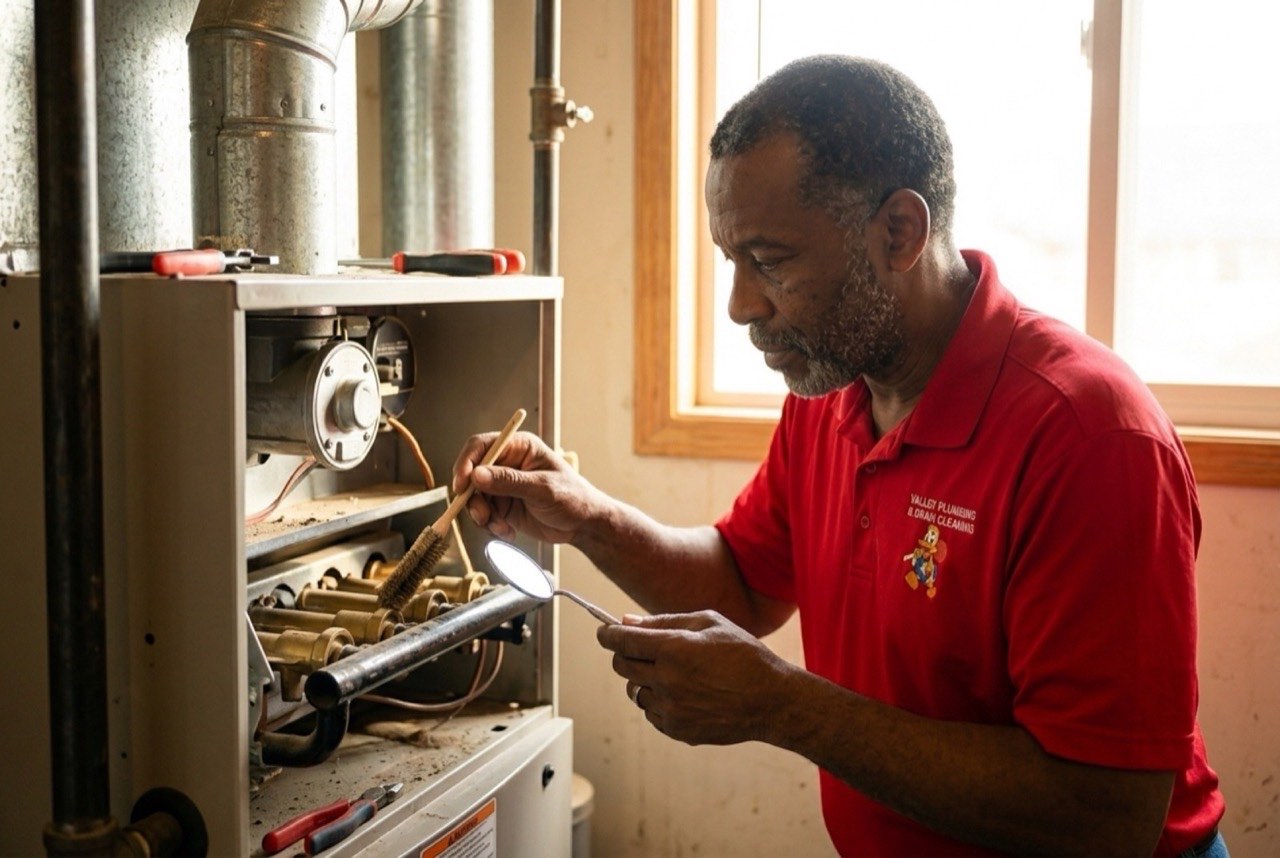
On the truck
Cable machine, jetter, and pipe camera — every call.
Power-down and panel access
Gas and electrical locked out. Combustion panel pulled, burner assembly exposed. Photos of starting condition for the service record. Borescope inspection of heat exchanger on units 12+ years old.
Clean — burners, flame sensor, inducer
Burners brushed and compressed-air cleaned. Flame sensor rod steel-wooled to bare metal. Draft inducer housing vacuumed. Blower wheel inspected and cleaned if loaded with dust.
Test and measure
Flame sensor microamps (4-10 µA target). Gas manifold pressure (3.5" WC for natural gas, verified against tag). Hot surface ignitor resistance (45-90 ohms typical). Pressure switch continuity and cutoff point.
Combustion analysis
Calibrated analyzer in the flue. CO, O2, flue temp, CO/air ratio logged. Anything above 100 ppm CO is a safety red flag and we stop to investigate the heat exchanger. Important on older SLC equipment.
Report and walk-through
Written report hand-delivered. Every test result, every observation, every recommendation. If everything passes you know it. If something's borderline you see the number and we explain what it means.
Pricing
Furnace Tune-Up Cost in Salt Lake City
Flat-rate, priced before service. Quality Service Club HVAC members get this included free. Older equipment may carry additional CO testing or borescope inspection time.
Annual furnace tune-up (non-member)
Low
$129
High
$189
Member
$110
– $161
Full 60-90 minute service, written report, combustion analysis
Tune-up + humidifier service add-on
Low
$189
High
$265
Member
$161
– $225
Pad replace, float test, plumbing check
Tune-up + AC pre-season service
Low
$229
High
$295
Member
$195
– $251
Book both in September, save on the bundle
Quality Service Club HVAC (1 unit)
Low
$199
High
$199
Member
$169
– $169
Annual tune-up included + 15% off repairs
Quality Service Club Combo (plumbing + HVAC)
Low
$258
High
$258
Member
$219
– $219
Plumbing inspection + HVAC tune-up + 15% off everything
Multi-unit add-on (2nd furnace)
Low
$89
High
$129
Member
$76
– $110
Same visit, additional unit
Boiler tune-up (alternative for hydronic homes)
Low
$185
High
$385
Member
$157
– $327
Avenues and Sugar House hydronic systems
Member pricing reflects the Quality Service Club 15% repair discount. Service call fees are separate.
Salt Lake City residential pricing 2026. Commercial multi-unit maintenance programs and apartment building boilers quoted separately.
Quality Service Club
Skip the bill. Skip the line.
For $79 a year, members get 15% off every repair, priority dispatch on every call, and a free annual drain and plumbing inspection — the same stuff we'd charge $195 for on a cold call.
- 15% off repairs
- Priority dispatch
- Annual inspection
- 24/7 service access
- $25 referral bonus
- Parts + labor warranty
Plumbing
$79/year
- 15% off all plumbing repairs
- Priority dispatch — skip the line
- Annual drain piping inspection
- Full home water-supply inspection
- Tag on your emergency shut-off
- $25 referral bonus
HVAC (1 unit)
$199/year
- 15% off HVAC repairs
- Priority dispatch on furnace or AC calls
- Annual furnace + AC safety inspection
- Thermostat calibration and battery swap
- Outdoor condenser cleaning check
Plumbing + HVAC
$258/year
- Everything in both plans
- Whole-home annual inspection
- 15% off every service we offer
- Priority dispatch across plumbing and HVAC
Questions? Talk to a real human — (801) 341-4222
Cancel anytime. 1-year minimum.
FAQ
Furnace Maintenance FAQs in Salt Lake City
$129 to $189 for a non-member annual tune-up — full 60 to 90 minute service with written report and combustion analysis. Quality Service Club HVAC members get it included in the $199/year membership, plus 15% off repairs and priority dispatch. Bundled AC tune-up (same visit in September) saves about 20% off booking separately.
Related services
Related Heating Services in Salt Lake City
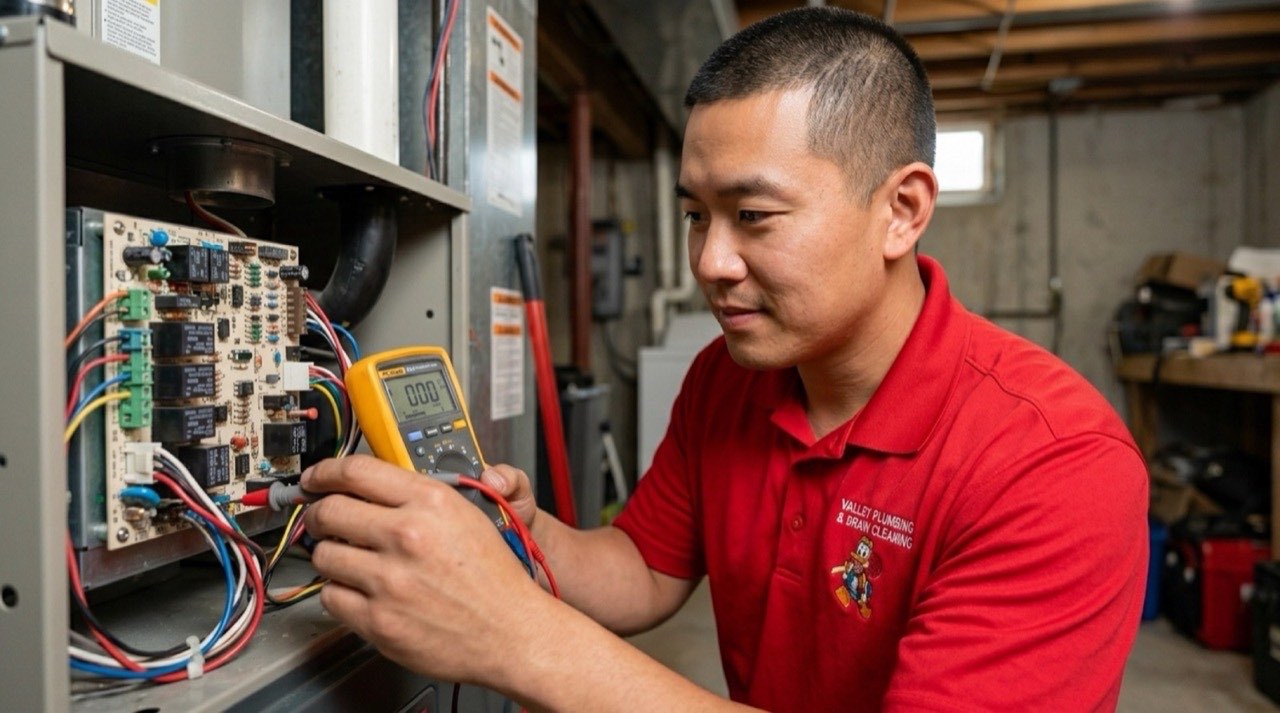
Furnace Repair
When the tune-up finds something — flat-rate repair same day.
Emergency Furnace Repair
No heat after hours — 60-90 min dispatch from our Marmalade shop.
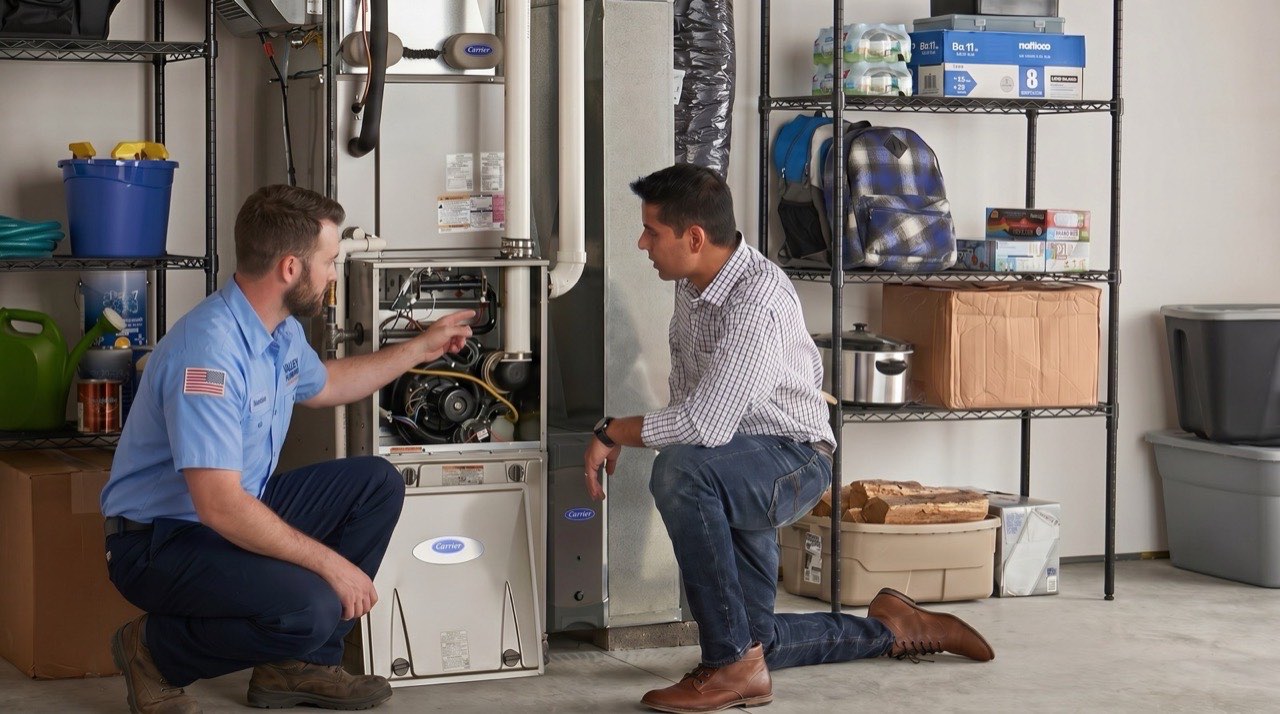
Furnace Installation
When tune-up reveals it's time for replacement (often on aging SLC equipment).
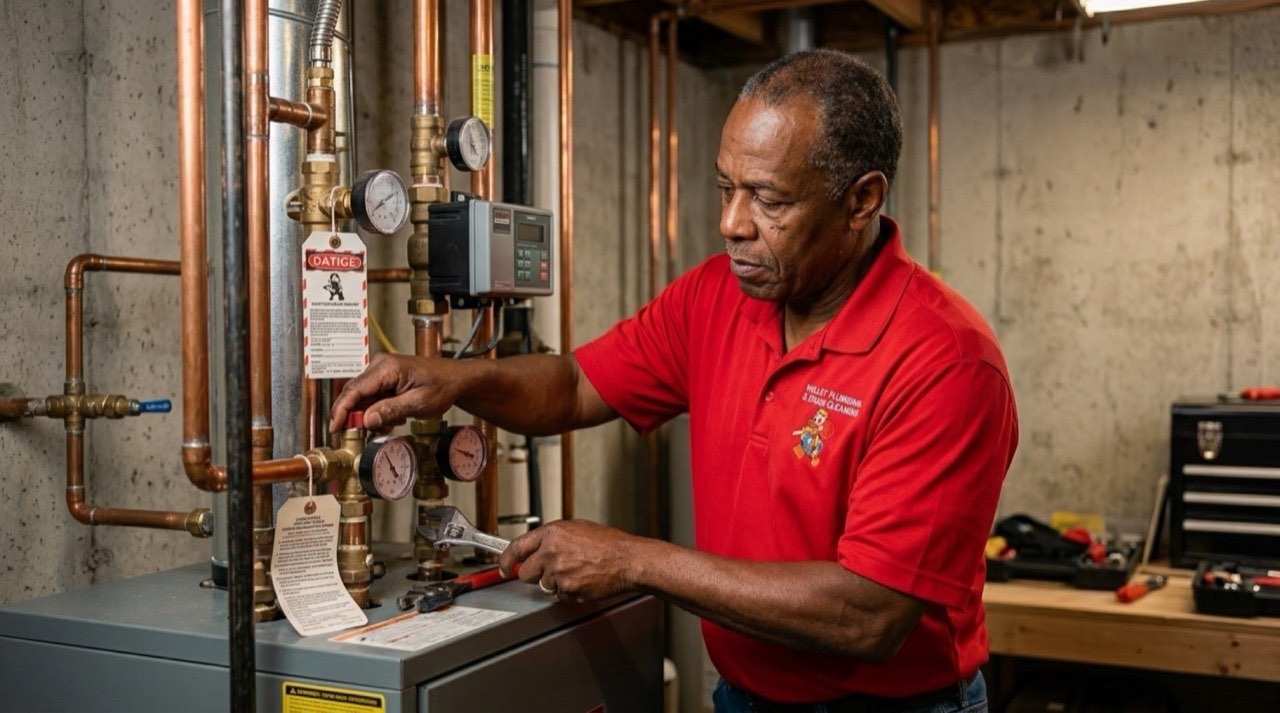
Boiler Repair & Install
Boiler tune-ups for Avenues and Sugar House hydronic systems.
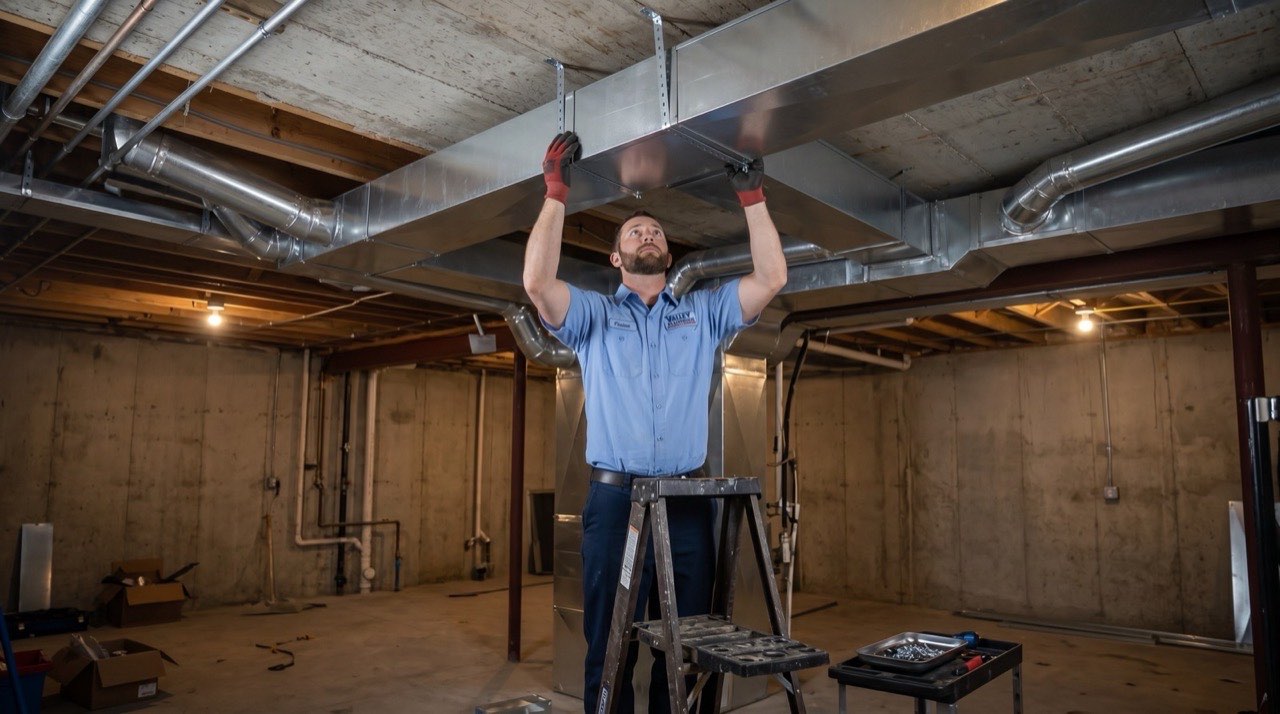
Ductwork Repair
Leaky duct sealing — important on inversion days.
Available Around the Clock
Emergency?
We answer 24/7.
Burst pipe, no heat, AC down? Real plumbers pick up — no answering machines. Valley Plumbing serves Salt Lake City and surrounding areas any time, day or night.
Licensed & Insured — Utah Plumbing Contractor