Ductwork
DUCTWORK REPAIR & RETROFIT IN SALT LAKE CITY
Old gravity-furnace ductwork that's never been balanced. Octopus-furnace systems converted to forced-air without proper trunk sizing. Narrow Avenues homes that can barely fit a return air. Inversion winters that make leaky ducts a real air-quality problem. We've worked all of it.
4.8★ on Google
3,132+ reviews
24/7 Emergency
60–90 min dispatch
Licensed & insured
Utah plumbing contractor
5 Utah counties
50+ cities served
Flat-rate pricing
Quoted before we start
Overview
Why ductwork is harder in old SLC homes
Ductwork in Salt Lake City is fundamentally different from ductwork in West Jordan or Lehi. Most of SLC's housing stock is older than the concept of central forced-air HVAC. Avenues, Sugar House, Marmalade, and Liberty Wells homes were built between 1890 and 1940 with hydronic boilers and radiators — or with massive gravity-fed octopus furnaces in the basement that pushed warm air upward through huge trunk lines. When forced-air HVAC was retrofitted into these homes in the 50s, 60s, and 70s, the ductwork was almost always undersized, poorly sealed, run through unconditioned attics, and balanced by guess. Most of those systems are still in service.
Our SLC ductwork crew spends most of its time on three categories of work. First, sealing leaky existing ductwork — most pre-1990 ductwork in SLC homes leaks 25-40% of conditioned air into attics, crawlspaces, and wall cavities. Second, converting old octopus-furnace ductwork to modern forced-air supply and return — the original 16-inch round trunks that fed gravity-fed warm air don't work right with a high-efficiency variable-speed blower. Third, retrofitting ductwork into 1920s Avenues homes that are 16-18 feet wide and have nowhere obvious to run trunks — usually the right answer is single-zone ductless mini-split heat pumps, but sometimes we make it work with creative routing through closets and soffits.
What duct problems cost in real dollars and air quality
A typical SLC home with leaky ductwork (25-35% loss is common in pre-1990 systems) is paying an extra $400 to $800 per year on heating and cooling — gas bills run higher in SLC than in newer suburbs because of the older equipment cohort. Worse, on January inversion days when outdoor PM2.5 spikes, leaky attic-run ductwork actively pulls polluted attic air into the supply stream and circulates it through the house. Sealing the ducts cuts utility bills 15-25% AND meaningfully improves indoor air quality on the worst inversion weeks. Payback runs 3 to 6 years on utility savings; the air quality benefit is immediate.
Common duct problems in SLC neighborhoods
- Octopus furnace conversion mismatch — original 16-18" round trunks that don't match modern furnace plenum sizing
- Unconditioned attic flex duct — joints disconnected at plenum, R-2 insulation that's degraded, hot in summer, frozen condensate in winter
- Undersized return air — single small return in a hallway feeding the whole house, blower starves for air
- Crushed flex duct in tight spaces — common in narrow Avenues homes where ducts squeeze through joist bays
- Leaky sheet metal joints — original 50s and 60s rigid metal trunks where mastic has dried and fallen off
- No insulation in unconditioned spaces — attic and crawlspace ducts in old SLC homes often have R-4 or nothing
- Single-zone heat distribution — original gravity systems have no zone control; some rooms always too hot, others too cold
Diagnostic — what's actually happening in your ducts
Two tools do most of the work. A pressure-based blower door and duct blaster test measures total leakage in cubic feet per minute at 25 pascals — this is the standard energy-code metric and tells us objectively how much your system leaks. Then we visually inspect with a lighted probe and camera, pulling insulation to look at joints, checking flex duct runs, measuring trunk sizes against load calculations. SLC homes typically test at 25-45 CFM25 per 100 sqft of conditioned space; Utah energy code targets 8 CFM25 on new construction. Lots of room to improve.
Sealing options for old SLC homes
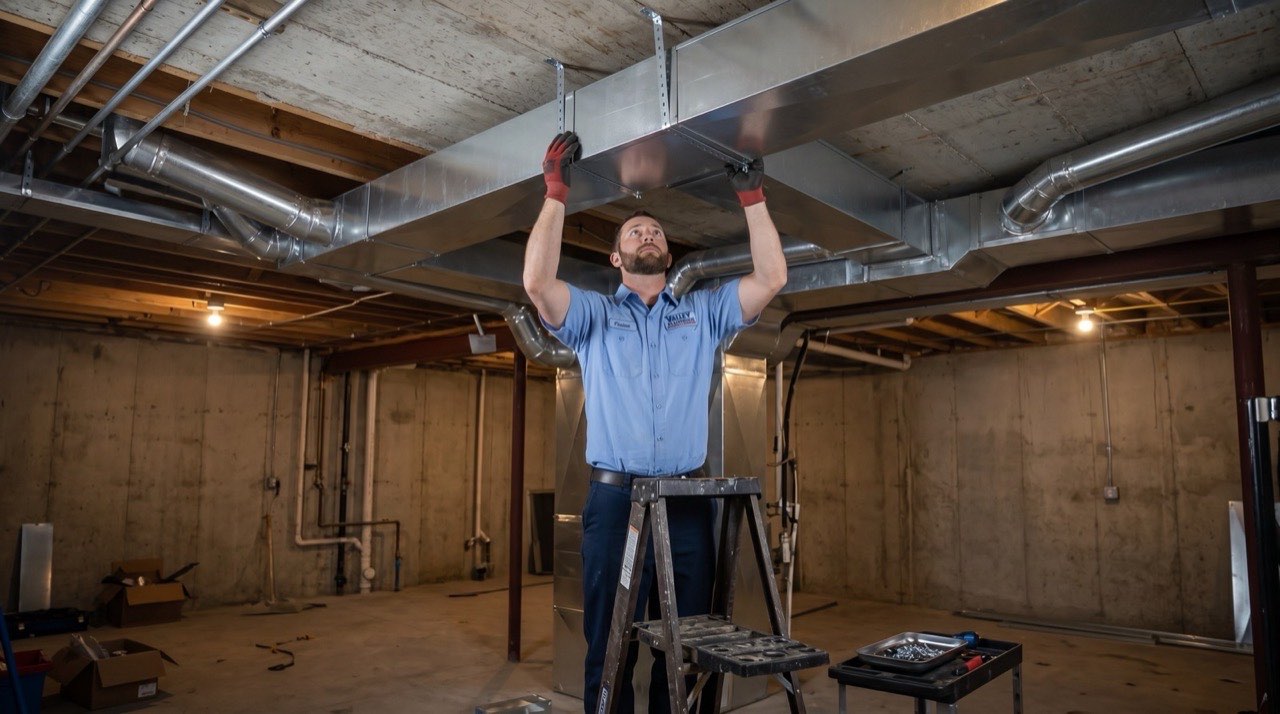
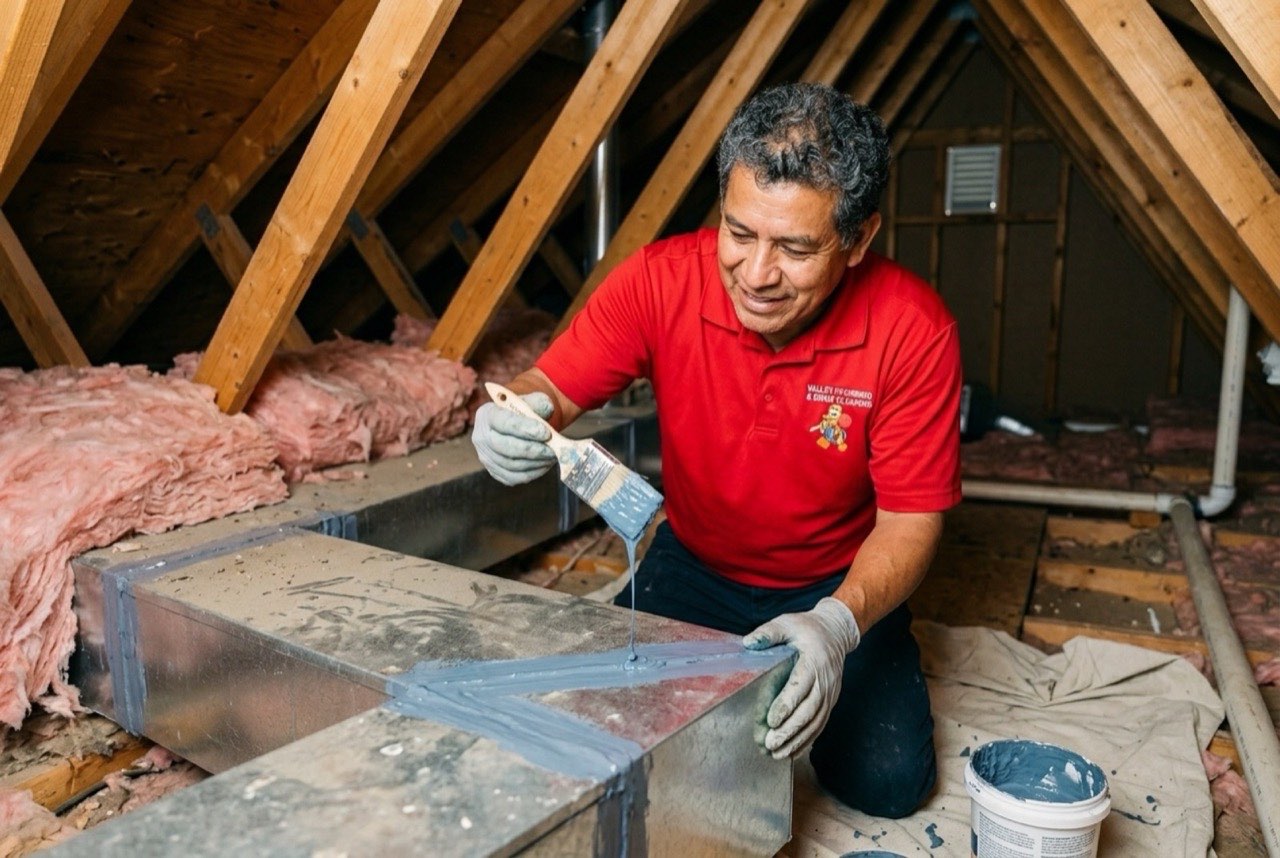
Manual sealing with mastic and foil tape — works where we can access joints. Mastic adhesive brushed onto every seam, foil-backed butyl tape on major connections, strap-and-screw on flex-to-rigid transitions. Effective in homes with accessible attics and basements. $1,500 to $3,500 for a typical SLC home.
Aeroseal interior sealing — a polymer aerosol pushed through the duct system under pressure; as it hits leaks, it accumulates and seals from the inside without needing to access the exterior. Works on attic flex inside finished walls — exactly the situation in narrow Avenues and Sugar House homes where you can't easily get to the ducts. $2,500 to $4,500 for most homes. Often the only practical option in homes with finished basements and fully-trimmed-out attic spaces.
Replacement of bad sections — if flex duct is collapsed, crushed, or just too old to seal, we replace runs with new insulated flex or rigid sheet metal. $15-$35 per foot installed.
Octopus furnace conversion — SLC specialty
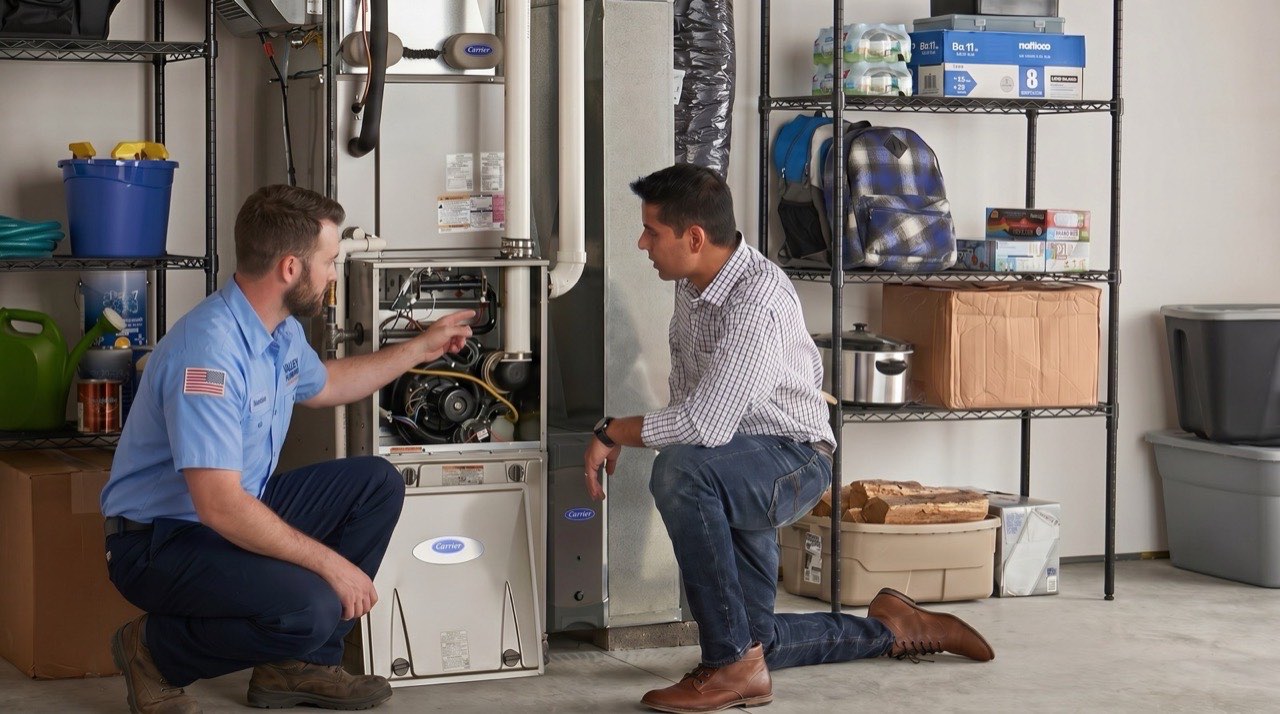
When we replace a 1940s gravity octopus furnace with a modern 95% AFUE condensing unit, the original ductwork almost always needs significant modification. The 16-18" round trunks designed for natural-convection airflow are now massively oversized for a small modern furnace's CFM output, which causes airflow velocity problems. The original branch runs to second-floor registers might be too restrictive for modern airflow. The original return path — usually a single grille at the bottom of the basement stairs — is way undersized. We resize the supply plenum, often add a new return air, and balance the system as part of any octopus replacement. Plan for $1,500-$3,500 in ductwork modification on top of the furnace install.
Single-zone retrofit in narrow Avenues homes
Some Avenues bungalows are 16-18 feet wide. There's no room to run new trunks through the house without massive interior surgery. In these cases the right answer is usually a multi-zone Mitsubishi Hyper-Heat ductless mini-split system — wall-mount or ceiling-cassette indoor units in each zone, slim refrigerant lines instead of ductwork, no significant remodeling. Install runs $12,500 to $22,000 for a 3-5 zone system, more if you need cassette mounts in every room. Way less expensive and more comfortable than running ductwork through plaster walls.
Registers, grilles, and balancing
Final step on most ductwork projects is room-by-room airflow balancing. Registers have dampers; we adjust them to deliver the right volume to each room based on heat load. Bigger south-facing rooms get more air in summer; colder north-facing rooms more in winter. On systems with zone dampers, we calibrate damper positions and confirm the bypass works. A well-balanced system feels even across the house and the equipment cycles properly.
Free quote
Duct leakage test or repair quote in SLC
Tell us what you're seeing. We'll schedule a duct blaster test and give you objective numbers before any work. Avenues, Sugar House, Marmalade — we know the housing stock.
4.8★
24/7
Emergency
Free
Quote
Current coupons
View all$75 OFF
Duct leakage test with any sealing work
Test fee waived if you proceed with sealing over $1,500.
Expires 12/31/2026
FREE
Duct assessment with any new furnace install
Basic visual assessment included with new equipment install. Quality Service Club members get full duct blaster test included.
Expires 12/31/2026
Mention coupon when booking. One offer per household.
Warning signs
Signs Your SLC Ductwork Needs Attention
Most of these get blamed on the furnace. They're actually ductwork problems — especially common in pre-1990 SLC homes.
Some rooms 6-8°F different from others (top floor of an Avenues home is the classic example)
Furnace runs constantly but can't reach setpoint on cold mornings
Gas bills high compared to neighbors with similar-sized homes
Dust accumulates on registers within a day of cleaning
Whistling or rushing sound from specific registers
Second-floor registers in a 1920s home that hardly push any air
Visible disconnected duct in attic or basement
Flex duct that's sagging, kinked, or crushed
Musty smell from vents on inversion days
Just finished a basement remodel and the same furnace can't keep up
25-40% loss
Your old SLC ductwork is leaking more than you think.
Most pre-1990 SLC homes lose 25-40% of conditioned air to duct leakage before it reaches a register. On inversion days, that means breathing attic air. Duct blaster test and seal pays back in 3-6 years.
Typical leak reduction
75%
Across Salt Lake, Utah, Davis, Weber, and Tooele counties.
The Process
How a Ductwork Assessment and Repair Goes in SLC
On the truck
Cable machine, jetter, and pipe camera — every call.
Visual inspection + load calc
Walk the attic, basement, and crawlspace. Photograph every duct run. Measure trunk sizes and branch runs. Count and measure registers. Compare to a Manual J load calculation for your home — important on old homes where insulation and infiltration vary widely.
Duct leakage testing
Duct blaster test measures total leakage at 25 pascals. Most SLC pre-1990 systems test at 25-45 CFM25/100sqft; Utah code targets 8. Identifies how much sealing work is justified.
Quote with options
Three tiers usually: targeted manual sealing on visible leaks, full Aeroseal interior sealing, or partial/full replacement of bad sections. For octopus conversions or narrow-home retrofits, we sometimes propose ductless mini-split as an alternative if duct routing is impractical.
Execute the scope
Manual sealing 1-2 days on site. Aeroseal: 1 day. Replacement: 2-4 days for major work. Octopus conversions are often done concurrent with furnace install.
Post-test and balance
Re-run duct blaster to confirm leakage reduction — typically 60-85% reduction on a thorough job. Balance room airflows with damper adjustments. Walk-through shows the before/after numbers.
Pricing
Ductwork Repair and Sealing Cost in SLC
Pricing varies by access, home size, and scope. Older SLC homes often cost more due to tight access. Diagnosis fee waived with any work over $500.
Duct leakage test (diagnostic)
Low
$225
High
$385
Member
$191
– $327
Blower door + duct blaster, full report
Manual duct sealing (accessible joints)
Low
$1,500
High
$3,500
Member
$1,275
– $2,975
Mastic and foil tape, 1-2 days on site
Aeroseal interior duct sealing
Low
$2,500
High
$4,500
Member
$2,125
– $3,825
Pressurized polymer aerosol, seals inside finished walls
Disconnected duct reconnection (single)
Low
$385
High
$685
Member
$327
– $582
Re-tape, re-strap, re-insulate
Crushed flex duct replacement (per run)
Low
$485
High
$985
Member
$412
– $837
Per run, typical 15-40 ft
Additional return air installation
Low
$685
High
$1,850
Member
$582
– $1,573
Cut-in new return, drywall patching extra
Octopus furnace ductwork conversion
Low
$1,500
High
$3,500
Member
$1,275
– $2,975
Plenum resize, return air addition, branch balancing
Trunk resize / plenum rework
Low
$985
High
$2,850
Member
$837
– $2,423
When new furnace needs different trunk size
Full ductwork replacement (1,800-2,500 sqft)
Low
$6,500
High
$14,500
Member
$5,525
– $12,325
Rigid and flex combination, Manual D designed
Member pricing reflects the Quality Service Club 15% repair discount. Service call fees are separate.
2026 Salt Lake City residential pricing. Historic district homes with restricted attic access may carry additional labor. Aeroseal pricing reflects certified installer rates.
Quality Service Club
Skip the bill. Skip the line.
For $79 a year, members get 15% off every repair, priority dispatch on every call, and a free annual drain and plumbing inspection — the same stuff we'd charge $195 for on a cold call.
- 15% off repairs
- Priority dispatch
- Annual inspection
- 24/7 service access
- $25 referral bonus
- Parts + labor warranty
Plumbing
$79/year
- 15% off all plumbing repairs
- Priority dispatch — skip the line
- Annual drain piping inspection
- Full home water-supply inspection
- Tag on your emergency shut-off
- $25 referral bonus
HVAC (1 unit)
$199/year
- 15% off HVAC repairs
- Priority dispatch on furnace or AC calls
- Annual furnace + AC safety inspection
- Thermostat calibration and battery swap
- Outdoor condenser cleaning check
Plumbing + HVAC
$258/year
- Everything in both plans
- Whole-home annual inspection
- 15% off every service we offer
- Priority dispatch across plumbing and HVAC
Questions? Talk to a real human — (801) 341-4222
Cancel anytime. 1-year minimum.
FAQ
Ductwork FAQs in Salt Lake City
Manual sealing on accessible joints runs $1,500 to $3,500 for a typical SLC home. Aeroseal interior sealing (the right call for finished older homes where you can't access ducts) runs $2,500 to $4,500. Single repairs like reconnecting a disconnected flex duct or replacing a crushed run price $385 to $985. Full ductwork replacement on a 1,800-2,500 sqft SLC home runs $6,500 to $14,500. Octopus furnace conversion ductwork modification is $1,500-$3,500 typically done with the furnace install.
Related services
Related Heating Services in Salt Lake City
Furnace Installation
Octopus furnace replacements include ductwork modification.
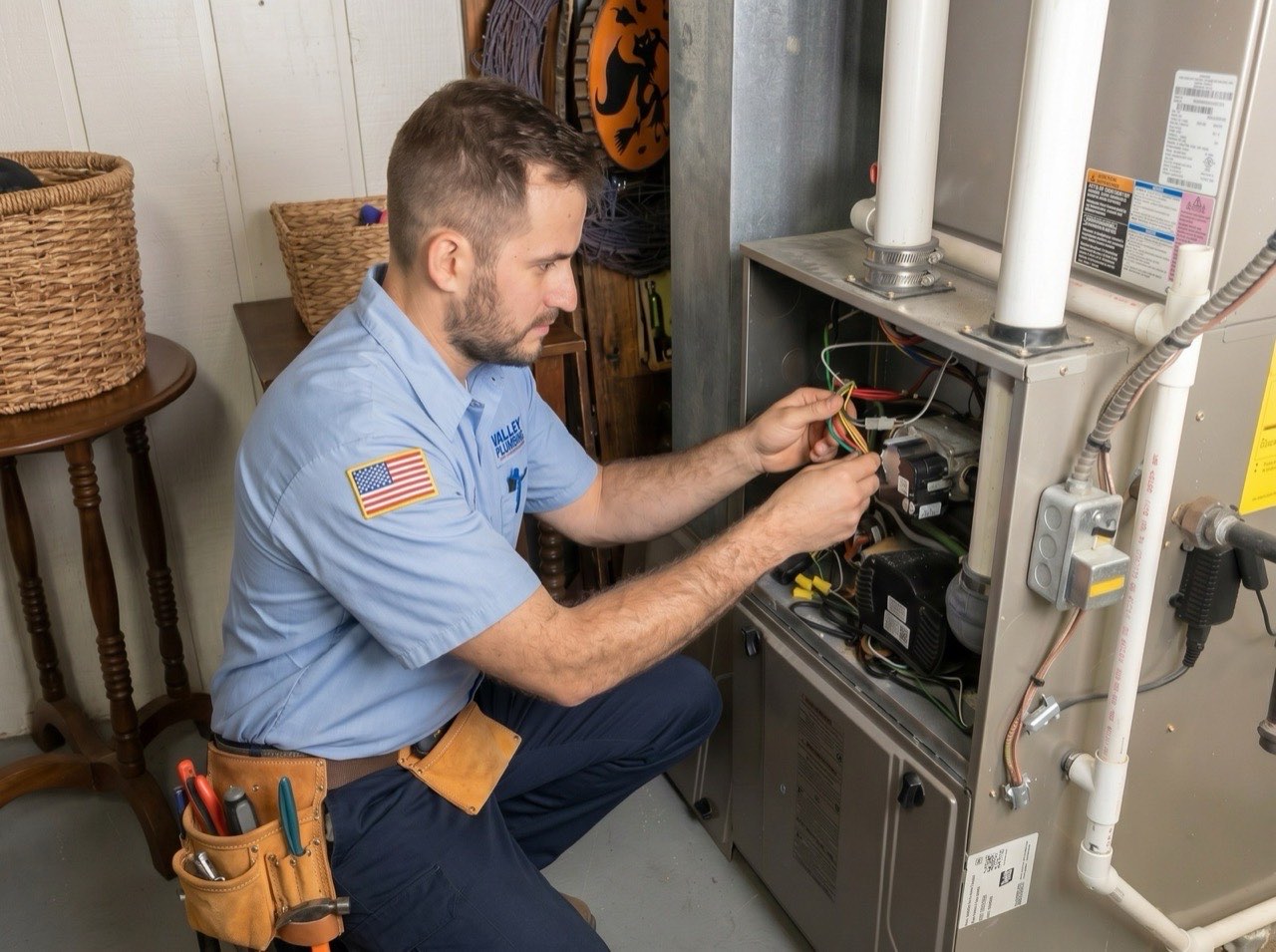
Furnace Maintenance
Annual tune-up catches duct issues that affect airflow.
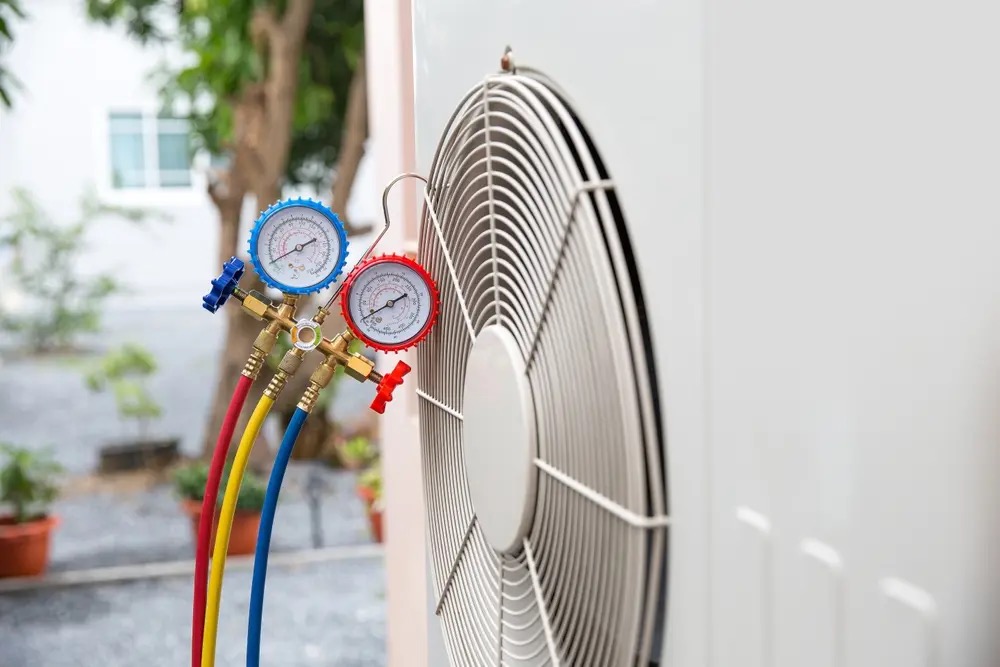
Heat Pump Installation
Ductless mini-splits when ductwork retrofit isn't practical.
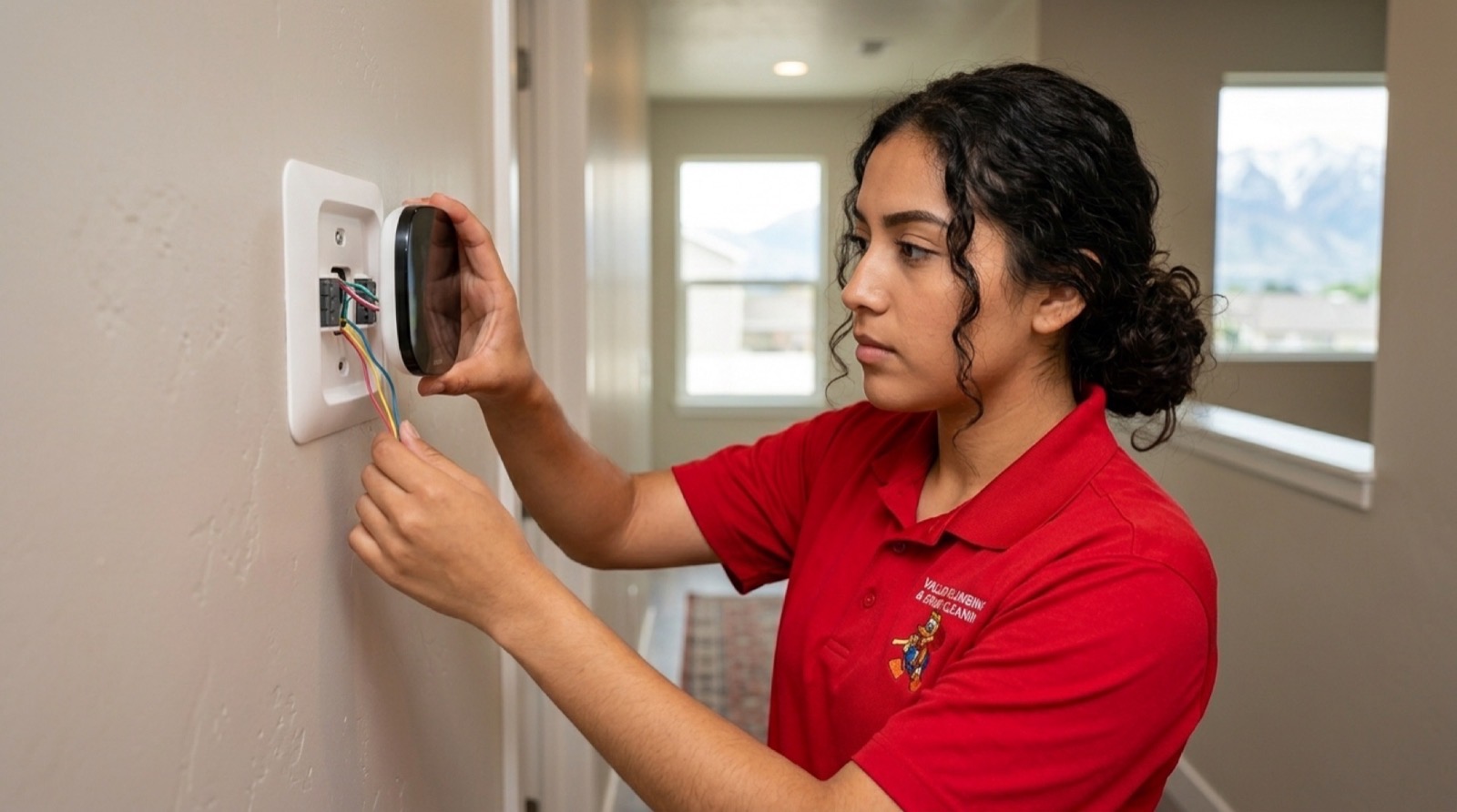
Thermostat Installation
Smart thermostats with multi-zone and balance-point control.
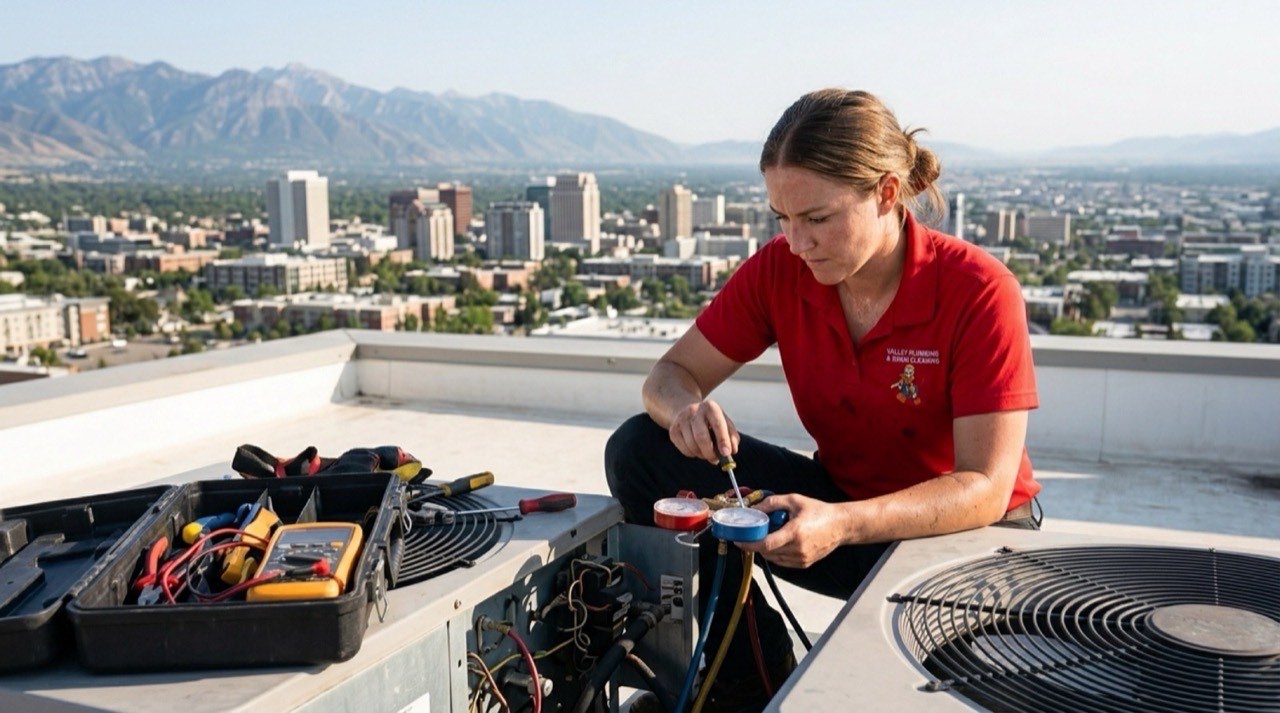
Commercial HVAC
Commercial duct design for downtown SLC restaurants and offices.
Available Around the Clock
Emergency?
We answer 24/7.
Burst pipe, no heat, AC down? Real plumbers pick up — no answering machines. Valley Plumbing serves Salt Lake City and surrounding areas any time, day or night.
Licensed & Insured — Utah Plumbing Contractor