01
Call Us
A real person answers 24/7. Tell us what's wrong — we'll give you a ballpark quote on the phone and schedule a time that works.
Clay tile sewer laterals from the 1910s–1930s are still common in the pre-war grid, and mature tree canopies in The Avenues, Sugar House, and Liberty Wells mean root intrusion is constant. Trench work downtown has to coordinate with SLCDPU for lead service line replacement, and historic-district permitting slows visible-from-street excavation in Capitol Hill and the Avenues Historic District.
Excavation in Salt Lake City
Full service-lateral replacement for leaking, corroded, or undersized water lines from meter to home.
Learn moreTargeted spot repair for a single pinhole, bad fitting, or shutoff valve — when the rest of the line is sound.
Learn moreDig-and-replace sewer service lateral work for collapsed, bellied, or root-choked lines.
Learn moreReplace an entire sewer line through two small access pits — no trench across your yard or driveway.
Learn moreWhat to Expect
01
A real person answers 24/7. Tell us what's wrong — we'll give you a ballpark quote on the phone and schedule a time that works.
02
Our tech arrives in a Valley Plumbing, Heating, and Cooling van, in uniform, shoe covers on. Diagnoses the issue and quotes flat-rate before any work starts.
03
We complete the work, clean up, and walk you through everything we did. Warranty covers our work for the life of the parts.
Valley Plumbing, Heating, and Cooling
Licensed Utah excavators, trenchless-certified, 24/7 emergency response.
Sewer & Excavation in Salt Lake City
Sewer and excavation work is the part of plumbing most Salt Lake City homeowners never think about — until a service lateral collapses, a main water line starts losing pressure, or raw sewage backs up into a basement floor drain at 11pm. Valley Plumbing runs a dedicated excavation division with our own operators, our own equipment, and our own trenchless pipe-bursting rigs. We're not subcontracting your dig to a general grading outfit. Every job in Salt Lake City and across Salt Lake County is planned, permitted, and executed by a crew that has been cutting into Utah soil and replacing failed service laterals for more than two decades. That matters when the pipe in question runs 7 feet under a finished driveway or a 40-year-old maple.
Utah soil isn't friendly to a shovel. Across most of the Wasatch Front — andSalt Lake City in particular — you're digging through a mix of expansive clay, silt, and rock cobble left behind by ancient Lake Bonneville. Clay holds water, swells in the wet season, and shrinks in the dry. That movement is hard on rigid pipe joints, especially older clay tile and cast iron sewer laterals. Certain pockets of Salt Lake County — particularly lower-elevation areas near The Avenues and Sugar House— also sit over a seasonally high water table, which complicates any excavation past about 5 feet of depth and makes shoring and dewatering a real consideration on longer service-lateral runs.
Salt Lake City's housing stock is predominantly mixed-historic, which is the single biggest factor in what we find underground. SLC spans roughly 150 years of building — Victorian-era homes in The Avenues and Capitol Hill, 1920s–40s bungalows in Sugar House and Liberty Wells, post-war ramblers in Rose Park and Glendale, and brand-new midrise infill on the 9-Line corridor and downtown. The ZIP-by-ZIP variance is dramatic. City sewer mains in established Salt Lake City neighborhoods are often 50 to 80 years old, and the service laterals — the pipe that runs from the house to the city tap in the street — are frequently the original material installed when the home was built. We've pulled clay tile out of yards in Salt Lake City that was stamped with a 1940s foundry mark and was still holding water (barely). We've also replaced 30-year-old PVC that failed from ground movement. Age alone doesn't tell the whole story — material matters, and so does what's been happening at the joints for the last several decades.
The first question on any sewer line call is material. In pre-1950s homes — which we still see throughout the older Salt Lake City neighborhoods — the service lateral is almost always vitrified clay pipe, sometimes called clay tile. Clay holds up structurally for a long time, but its bell-and-spigot joints are a magnet for root intrusion. Homes built in the 1950s and 1960s typically used cast iron for the lateral, which lasts 50 to 75 years but corrodes from the inside out and develops "channeling" along the bottom of the pipe. The 1970s and early 1980s brought Orangeburg — a bitumen-impregnated wood-fiber pipe that was cheap and easy to install and ages terribly. Orangeburg deforms into an oval under soil pressure and eventually collapses; if your Salt Lake City home was built in that window and still has its original lateral, it's not a matter of if. Anything built from the mid-1980s forward is generally PVC or ABS, both of which hold up well unless the bedding was poor or ground movement has caused a bellied section.
Root intrusion is the runaway leading cause of sewer failures we see in established Salt Lake City neighborhoods. Mature trees — poplars, maples, willows, and ash — send fine feeder roots toward any joint with even a small leak, and once they're inside the pipe they grow into a full mat that catches paper and grease. Common signs of a failing sewer lateral: recurring backups that jetting only fixes temporarily, multiple fixtures draining slowly at the same time (toilet gurgles when the washing machine drains, tub backs up when the toilet flushes), sewage odor in the yard along the line run, and patches of unusually green grass in a strip across the lawn. Clay tile sewer laterals from the 1910s–1930s are still common in the pre-war grid, and mature tree canopies in The Avenues, Sugar House, and Liberty Wells mean root intrusion is constant. Trench work downtown has to coordinate with SLCDPU for lead service line replacement, and historic-district permitting slows visible-from-street excavation in Capitol Hill and the Avenues Historic District. SLCDPU collection system discharges to Central Valley Water Reclamation Facility; significant combined/aging clay and cast-iron laterals in pre-1950 neighborhoods Every sewer call gets a camera inspection before we quote anything — we're not guessing what's down there, and neither should you.
Trenchless is the reason Salt Lake City homeowners no longer have to tear up a driveway, a mature landscape, or a stamped concrete patio to replace a failed sewer line. There are two trenchless methods we run. Pipe bursting pulls a new HDPE pipe through the path of the old line while a bursting head fractures the old pipe outward into the surrounding soil — you end up with a brand-new, fused, jointless pipe in the exact same trench line. CIPP (cured-in-place pipe) lining is the other option: we pull a resin-saturated felt liner through the existing pipe and cure it in place, essentially creating a new pipe inside the old one. Both methods need only two small access pits — one at the house cleanout and one at the city tap — instead of a 60- to 100-foot open trench.
Trenchless isn't the right answer every time. If the line has fully collapsed, there's no path for the bursting head or liner to follow, and you're back to a traditional dig. Same with severely bellied sections where the pipe has sagged below grade — a liner just reproduces the belly, and pipe bursting won't correct grade either. But for most root-intrusion failures, off-spec materials like Orangeburg, or aged clay and cast iron that are still continuous, trenchless is the clear win. A full traditional dig on a typical Salt Lake City service lateral runs 3 to 5 days of crew time plus landscape and hardscape restoration. Trenchless is usually 1 to 2 days with two small patches to restore. On a home with a mature lawn, a long driveway, or any kind of hardscape between the house and the street, the math on trenchless is hard to argue with.
The water service line — the pressurized pipe from the city meter at the curb into your home — is the other major excavation job we handle in Salt Lake City. Homes built before 1986 can still have lead solder or, in some older Salt Lake City sections, lead service lines; any Salt Lake City homeowner in a pre-1986 house should know what their service line material is. Galvanized steel service lines, common in mid-century construction, corrode from the inside and slowly choke off flow — you'll see it as low pressure throughout the house, rusty water on the first draw in the morning, and eventually a sudden jump in your water bill from a pinhole leak you can't find.
Copper service lines from the 1960s–1980s are getting close to the end of their usable life in Utah's hard-water conditions, and modern replacements use either PEX-A or type K copper depending on the application and the local code. Salt Lake City Building Services handles permits; the Historic Landmark Commission reviews exterior work in the Avenues, Capitol Hill, Central City, and South Temple historic districts. SLCDPU requires coordination for any water-service tap. Separate backflow testing program through SLCDPU. In Salt Lake City, any water service line replacement requires a permit from the local building department, a pressure test, and an inspection before backfill. We pull every permit, coordinate with the water department for the meter side of the connection, and handle the inspection scheduling — you don't have to chase anyone down.
Beyond sewer and water service, our excavation crew takes on yard and foundation drainage projects in Salt Lake City year-round. That includes French drains for chronically wet yards, swales and surface grading to move water away from the foundation, perimeter footing drains for basements that seep in the spring melt, storm drain tie-ins, dry wells, and sump pit excavation. In Salt Lake City's lower-elevation areas and anywhere with a seasonally high water table, foundation drainage isn't optional — it's the single best thing you can do to keep a basement dry long-term. We locate utilities, cut to depth, bed in perforated pipe with drain rock and filter fabric, and tie the discharge into a daylight or a storm connection that makes sense for the property.
Utah requires a state-licensed plumbing contractor for any sewer or water service work, and the excavation itself falls under additional licensing through DOPL. Valley Plumbing, Heating, and Cooling carries both, plus the general liability and workers' comp coverage any Salt Lake City homeowner should be asking about before a crew shows up. Every dig starts with a Blue Stakes of Utah locate — call 811 or submit online at least two working days before excavation — to mark public utilities. Private utilities (landscape wiring, secondary water, gas lines past the meter, low-voltage) aren't covered by 811, and we run our own private locate before breaking ground. Salt Lake City Building Services handles permits; the Historic Landmark Commission reviews exterior work in the Avenues, Capitol Hill, Central City, and South Temple historic districts. SLCDPU requires coordination for any water-service tap. Separate backflow testing program through SLCDPU. City or county permits are pulled for every sewer lateral and water service replacement in Salt Lake City, and inspections happen before backfill so the work is visible and verified. We handle the full permit package, schedule the inspections, and give you the closed-out documentation for your records and any future home sale.
A sewer backup isn't a next-week problem — it's a right-now problem, and bypassing it costs more with every hour of sewage sitting in a basement or seeping into a crawlspace. Our emergency line is live around the clock, answered by a real dispatcher, and our typical response time for urgent sewer calls inSalt Lake City is under two hours. We show up with a jetter, a camera, and a vac truck in the same run, so we can clear the line, inspect the failure, and have a repair plan in front of you before we leave — not three days later. If you're dealing with an active sewage backup or a broken water service line right now, stop reading and call (801) 341-4222.
Same-day service · Flat-rate pricing · Family-owned since 2011.
By the Numbers
15+
Years Serving Utah
70,000+
Jobs Completed
4.8★
Google Rating
24/7
Emergency Response
“Called Valley Plumbing, Heating, and Cooling on a Saturday when our water heater died. They had a new unit installed by 4pm that same day — honest pricing, no pressure, clean work. The tech even explained everything he was doing. Easily the best plumbing experience we've had in Salt Lake City.”
Jennifer M.
The Avenues · Trenchless Sewer Line Replacement
Valley Plumbing, Heating, and Cooling
Flat-rate pricing, free camera inspection with most jobs.
FAQs
Yes — our Salt Lake City team covers every ZIP code from the Avenues and Capitol Hill to Sugar House, Liberty Wells, and downtown. We're typically on-site within two hours for urgent calls.
Salt Lake City water averages 400–450 ppm of dissolved minerals — among the highest in the country. That hardness deposits scale inside water heaters (cutting efficiency and lifespan), clogs showerheads and aerators, and corrodes older pipe joints. We recommend a whole-home water softener or conditioner for any home in the city.
Yes. We dispatch from a central Salt Lake City location and offer same-day appointments Monday through Saturday. For burst pipes, sewage backups, and gas leaks, we respond 24/7 — call our emergency line and a tech is typically on-site within an hour.
Absolutely. Valley Plumbing, Heating, and Cooling is licensed and insured in Salt Lake City and handles all permit applications through Salt Lake City Building Services. We coordinate inspections so you don't have to — and every permitted job comes with documentation for your records and future home sale.
More Valley Services in Salt Lake City
Valley Plumbing, Heating, and Cooling runs plumbing, HVAC, and excavation crews out of the same dispatch. One call, one trusted team, flat-rate pricing across every service we offer.
Why Valley Plumbing, Heating, and Cooling
Utah homeowners have leaned on Valley for over two decades. Here's why.
Every tech is state-licensed, background-checked, and continuously trained.
Real humans on the phone, techs dispatched fast, any hour, any day.
We quote before we start. No hidden fees. No bait-and-switch.
Shoe covers on, drop cloths down. We leave your home cleaner than we found it.
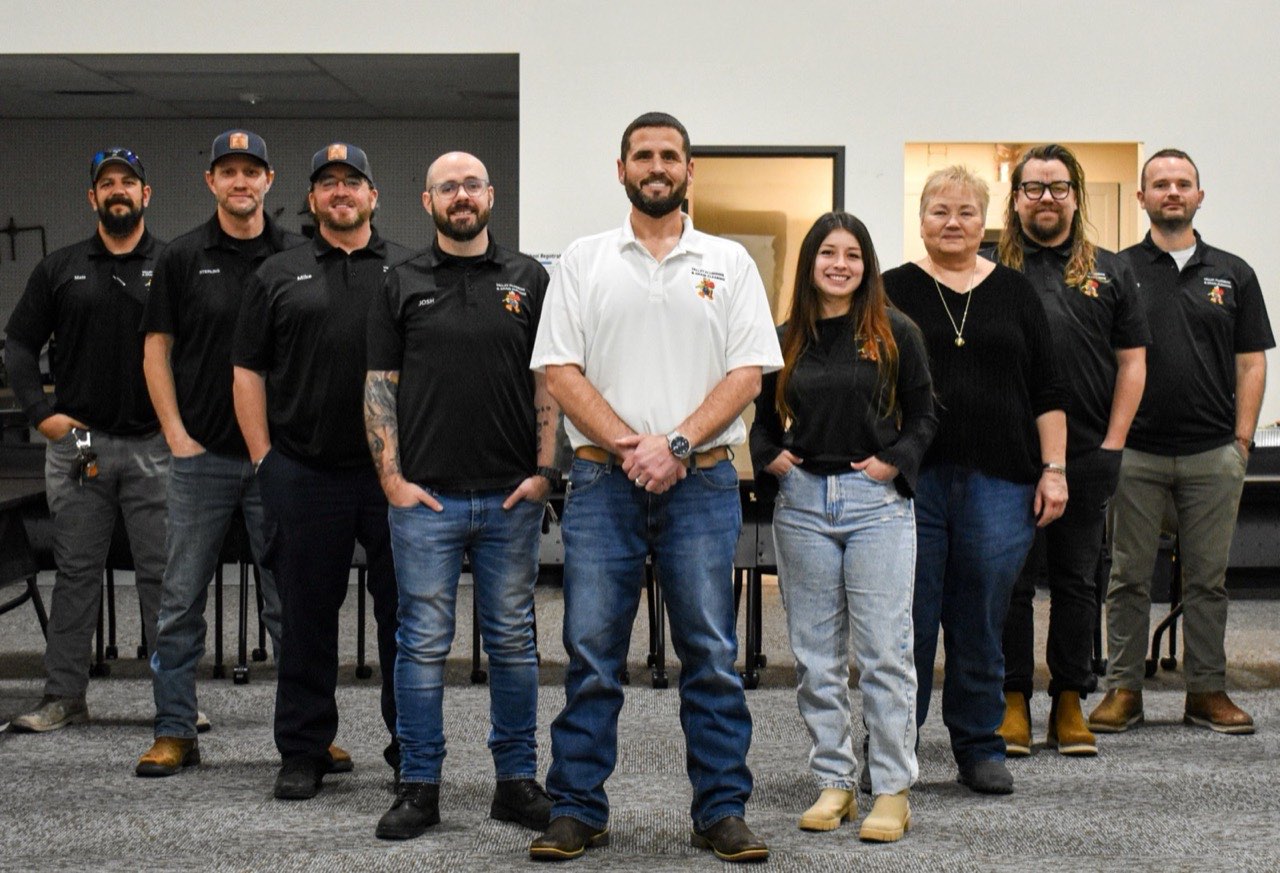
4.8
3,132+ Google Reviews
Excavation service near Salt Lake City
Available Around the Clock
Burst pipe, no heat, AC down? Real plumbers pick up — no answering machines. Valley Plumbing serves Salt Lake City and surrounding areas any time, day or night.
Licensed & Insured — Utah Plumbing Contractor