Brown hot water can be alarming when the cold tap beside it looks clear.
A careful check helps Salt Lake City homeowners describe the change.
It does not prove the heater has failed or the water is safe.
Record which water is affected.
Pause use of visibly discolored water for drinking, cooking, and laundry while you seek guidance.
If safe, compare hot and cold water separately at a few easy to reach outlets.
Note whether one fixture or several are affected, then contact the right plumbing or water-supply provider.
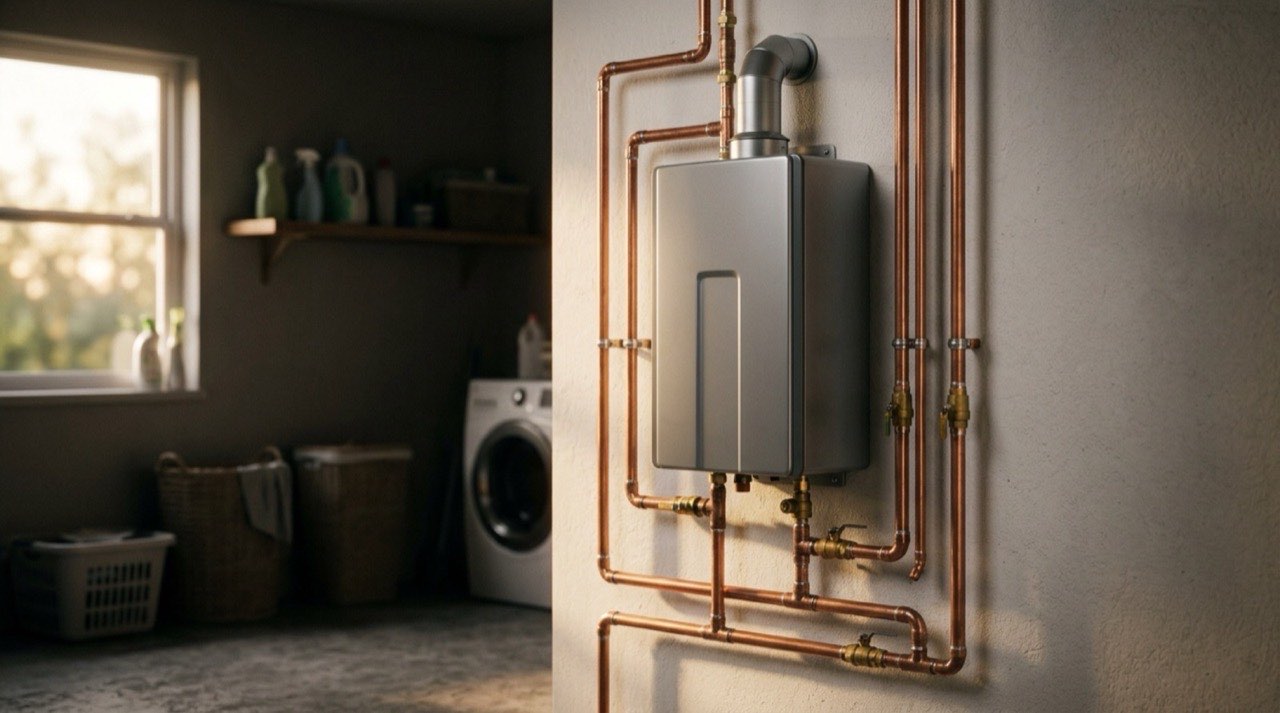
Start with the hot and cold distinction
Do not base the comparison on one mixed stream from a single-handle faucet.
Use the familiar hot and cold positions separately, taking care not to expose yourself to scalding water.
If the handle position or temperature is unclear, skip the test and describe that limitation.
Portland Water Bureau's troubleshooting guidance uses the same basic distinction: hot-only color change points toward the water heater or hot-side piping.
Color at cold outlets as well calls for a wider check of the affected area.
That is general troubleshooting guidance, not evidence about Salt Lake City's water supply on a particular day.
It also does not prove which part of your home's plumbing needs work.
A plumber still has to assess the actual system.
Avoid tasting the water or judging it safe because the color is faint. Appearance alone does not reveal every water-quality concern.
If your provider has issued an advisory, follow its instructions rather than relying on the comparison below.
Compare locations without prolonged flushing
Choose a small number of easy to reach outlets that you already use.
Note whether the kitchen, a bathroom sink, and another fixture show the same hot-water change.
Brief notes during normal use are enough to describe the pattern.
Do not keep filling tubs or repeatedly draining water to make the color disappear.
Leave washing machines, dishwashers, and other equipment out of the comparison.
A wider test adds water use without necessarily answering the cause.
A simple record can distinguish three situations:
- One outlet has discolored hot water while other hot outlets look unchanged.
- Several hot outlets are affected while their cold sides appear clear.
- Cold water is also discolored at one or more locations.
For hot-side color changes, contact Valley Plumbing for water heater service. Ask for a check of the affected system.
Include the outlet comparison rather than reporting only “brown water.”
Add timing to the location record
Write down when you first noticed the change. Note any recent plumbing work, water outage, or long break in use.
Those details help tell the story. They do not prove a cause.
Also note whether the color appears right away, changes during ordinary use, or returns at the next use.
Do not recreate the event solely to improve your notes.
One accurate note is better than repeated experiments around hot water.
Photographs may help show the difference between outlets.
Use a clean, light-colored background if you can do so without handling hot water.
Tell the person reviewing the image which tap and setting produced it, because a photograph alone cannot provide that context.
If you only saw the color once and did not check the cold side, say exactly that.
There is no need to fill gaps with assumptions.
Do not diagnose a tank from its water color
Brown hot water does not, by itself, prove that a storage tank has rusted through.
The hot-water path includes more than the heater, and not every household uses a storage tank.
The useful question is where the change occurs and what check can explain it.
Avoid declaring that a heater must be replaced simply because an online example has the same color.
Age, condition, and the actual source of color change need separate consideration.
Do not drain a heater, remove its parts, or try a chemical treatment based on a visual comparison.
Those tasks introduce hot water and equipment-specific procedures before the cause is known.
If you also find a leak, steam, or water near electrical equipment, stop comparing outlets and report the safety concern.
Keep people away from the affected area while arranging help.
Use the right route when cold water is affected
If cold water is discolored too, check your water provider's current notices and contact its water-quality team.
The provider named on your water account is the right starting point; a nearby city may use a different system.
For example, a homeowner who first sees brown water at a shower might assume the heater is responsible.
If a separate cold kitchen tap also shows color, that added note changes the questions to ask.
It does not automatically show a neighborhood outage or contamination event.
Ask the provider what water use is right and whether any flushing instructions apply to your address.
Do not substitute another city's generic flushing steps for current local directions.
Get help with the hot-water pattern
If brown hot water persists in your Salt Lake City home while cold water appears clear, contact Valley Plumbing for water heater service.
Share the affected outlets, timing, and any recent changes.
That record supports a focused check without treating color as a complete diagnosis.